When I entered the Freedman Remak History Community Room in Smith Hall for the History Honors Colloquium in March, I could feel the room buzzing with excitement from students eager to present the final results of months of research and writing–it was difficult to find a place to sit! Looking around, I saw plenty of undergraduates, some parents beaming with pride, and history faculty, who advised students on their projects and were nearly as excited as their protégés. It was touching to see so many of the students’ peers, some from within the department but many from outside of history, turn out to show support through their cheers and thoughtful questions.
The nine presentations, divided into three panels, spanned time and place. Students took the audience to the Philippines, Brazil, medieval Europe, Korea, and beyond as they explored topics such as the making of a transnational, Cold War intellectual; midwifery in fourteenth-century England; and the militarization of the Brazilian police force. Each presentation was impressive.
For me, one panel stood out for its depth of research and also the eloquence of its presenters. At first glance, the three topics in this panel seemed unrelated: Elizabeth Brown examined female leadership in medieval Italy, Kaya Suraci discussed the evolution of a third-gender identity in Mexico, and Grant Deines presented on citizen activism in postwar Japan. Yet the panel’s faculty discussant, Professor Purnima Dhavan, skillfully drew out the connections for the audience, noting how each student emphasized the importance of local traditions as well as shifting understandings due to emerging technologies. Furthermore, the historical actors presented in these papers demonstrated an acute awareness of the power of public image.
I sat down with Elizabeth and Kaya to discuss their experiences in the honors program, the challenges they faced in their research, as well as their plans for the future.
Elizabeth Brown, “Matilda of Tuscany: Power, Lordship, and the Future of Italy”
Elizabeth Brown was named after England’s Elizabeth I. As a child, she often received books about her namesake and the period in which she lived during as birthday presents, a tradition that would eventually lead her down her current path researching female leadership in medieval Europe. She recalls one book that made a strong impression on her, a collection of stories about powerful and unique women. It was in this book that she first encountered Matilda of Tuscany. "Her story stood out to me. [During] my medieval coursework, I was on the lookout for any mention of her, and strangely enough, she didn't appear."
When the moment came to choose a topic for her honors thesis, Elizabeth knew that it had to be about Matilda. Scanning through the available literature, she quickly realized that the existing scholarship on Matilda of Tuscany focused mainly on her international role and the influence she had on powerful men but was significantly lacking when it came to her local influence. "That ultimately ended up being my argument: her lordship on the local stage was just as important to the legal and cultural future of Italy as her involvement in international politics."
For primary resources, Elizabeth turned to English translations of medieval Latin texts. She read personal letters to and from Matilda, legal documents she issued or signed, known as diplomata, and contemporary literary sources which included poetry, vitas, and biographies. One of the most interesting sources Elizabeth discovered was the writing of Bonizo of Sutri, a local bishop and contemporary of Matilda, which discussed women rulers of his time. Bonizo and Matilda had originally been allies, but their priorities began to drift until Matilda eventually turned away from him altogether. Lacking the protection she provided, Bonizo fell into the hands of his enemies and was mutilated and disfigured. "His writing on women rulers is a very thinly veiled criticism of Matilda following this betrayal, and it is so fascinating to see the points he criticizes, the points he ignores, the elements of womanhood he praises, and the biblical and mythological figures he uses as examples."
Elizabeth did encounter some challenges in her research. In trying to reconstruct Matilda’s leadership and local influence, she struggled with primary sources that were limited in scope. "I had to find the sources that danced around that topic or find the meaning in the absence of information." For example, Matilda heavily influenced the local commune movement, the attempt by northern and central Italian cities at becoming independent from feudal lords and bishops. However, she never discussed this movement in her own writings. So, Elizabeth had to find additional primary and secondary sources to fill the gaps.
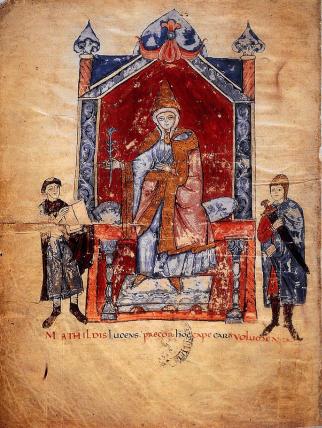
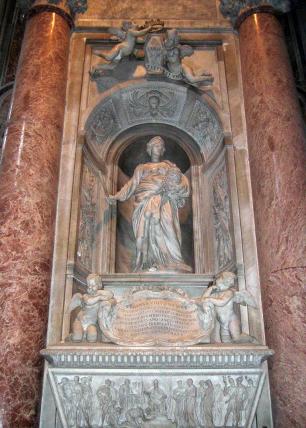
Image 1: Matilda enthroned in the Vita Mathildis receiving her copy of the manuscript.
Image 2: The tomb of Matilda in St. Peter's Basilica, Rome. It was sculpted by Bernini in 1633.
Kaya Suraci, “Los Muxes de Juchitán: The Transformation of a Third-Gender Identity from Mexico’s Isthmus to the World Stage”
Kaya Suraci developed an early interest in history through reading historical fiction and her history classes in school. As a child, she and her family would often travel to Latin America, where they explored ancient Mesoamerican sites. This sparked an interest in Latin American history. "After learning about these Indigenous cultures during family trips, only to have their history entirely excluded from my history education in school, I became dedicated to spreading this history that I found myself particularly drawn to."
So when the time came to look for a topic for her honors thesis, Kaya knew she wanted to work on Latin American Indigenous cultures. During her sophomore year, she took History of Mexico with Professor Adam Warren, who encouraged his students to seek out topics for an essay using modern news sources. This is when she first learned about los muxes, a recognized third gender within the Zapotec culture of Oaxaca in Mexico. She wrote an essay about them not expecting that this would eventually lead to her honors thesis. "Fast forward to the end of my junior year, and I found myself rediscovering los muxes as a wildly underresearched topic, particularly considering the increased publicity surrounding the identity in recent years. And yet, no one seemed to understand exactly what a muxe was or where they came from." Through her research, Kaya eventually determined that there is no true answer to either of those questions. "Los muxes have spent the last hundreds of years interacting with other cultures, whose oppressive or at least differentiating views on gender and sexuality had both changed the practice of the identity and convoluted how los muxes were presented to foreign audiences." Kaya argues in her paper that the modern identity of los muxes forms an expression of the unique culture of the Zapotecs, and they continue to be recognized and protected by the community despite social media and the encroachments by outside researchers, journalists, and tourists accelerating shifts in the traditional muxe identity.
Finding primary sources for this project was not an easy undertaking. Kaya explained that research surrounding los muxes is sparse, and a lot of it was poorly done in the first place. Although los muxes have existed since pre-colonial times, they are not mentioned in primary sources until the late twentieth century. This shifted Kaya's focus to a more contemporary primary source base. "I used news articles and primary research to determine how los muxes and their identity has survived and changed throughout this period of accelerating globalization." Despite the changes in presentation, origin, and occupations of los muxes, Kaya determined that los muxes are an expression of ancient Zapotec and Juchitan culture, which has a long history of gender differences and resistance. "So even though they are not mentioned in older sources, I was able to determine that muxe identity continues Zapotec tradition."
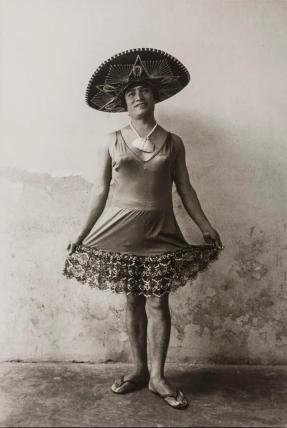
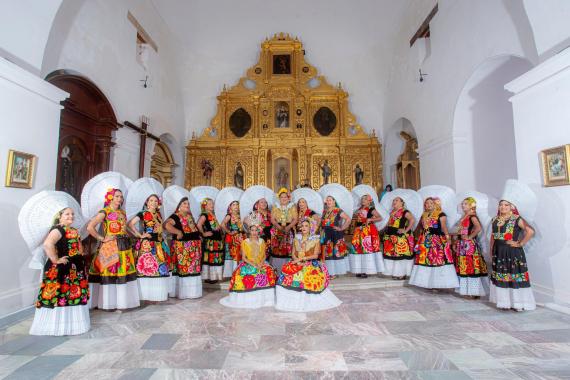
Image 3: Graciela Iturbide, Magnolia con sombrero (Magnolia with Sombrero), Juchitán, 1986
Image 4: Las Interpidas (the muxe organization) within Juchitan's main church.
I asked Elizabeth and Kaya about their plans after graduation, and their worries about the future were palpable. While they both enjoyed the research and writing process and are very interested in pursuing a PhD in history, we live in unstable times with reduced opportunities. Kaya had wanted to participate in a program in Spain before applying for graduate school. "Sadly, I am entering the world at a moment where opportunities for young people are slipping away. The program I intended to enter in Spain has been shut down, and everyone who knows anything tells me that getting a PhD in history right now is, at best, an extremely risky move." Elizabeth shares this sentiment and added that she can't stay at UW because the history department has suspended graduate admissions for next year. Nonetheless, they both believe in the importance of studying history, especially in these politically unstable times, and they are not willing to give up on their passion. Kaya notes that her history work feels more important than ever at a time when history is being rewritten by both AI and politicians. Elizabeth added that understanding history is critical to understanding the present, and that the skills one develops in history education lend themselves to all sorts of other contexts.
We are keeping our fingers crossed for Elizabeth and Kaya and their graduate school applications and look forward to seeing what these two scholars accomplish next.